R. T. Walker
R. T. Walker was a right-handed sidearm pitcher for the Homestead Grays in the latter part of the 1940s, though he was not usually considered one of the team’s front-line pitchers. Despite playing for one of the highest-profile Black professional teams of the time, nearly every aspect of his biography--his name, the teams he played for, his birth place, his age—is a minor mystery.
According to James Riley, R. T. Walker’s mother “named him after the movie actor Robert Taylor,” but his teammates mocked him for his disagreeable looks, Josh Gibson even putting him on his “all-ugly team.”1 I can’t corroborate these claims of Walker’s unsightly appearance, which seem a little harsh to me. (I also couldn’t find anything on Josh’s all-ugly team, so I don’t know who else was unfortunate enough to appear on it.)
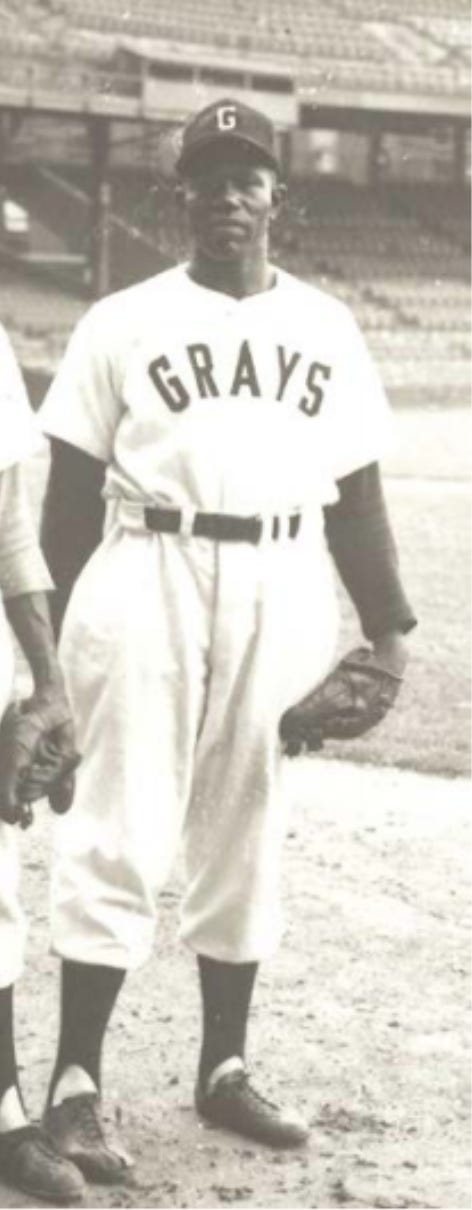
In any case, as Walker’s SABR biographer Irv Goldfarb points out, the actor Robert Taylor was born in 1911 and didn’t make his first movie until 1934 (when R. T. Walker was already an adult), so (in Irv’s words) “that particular tale seems implausible.” I’m guessing that Riley or someone who reported it to him just misinterpreted another joke about Walker’s appearance. As far as I can tell, he was never referred to as Robert or Bob Taylor during his baseball career, being nearly always called simply “R. T.”
Riley has Walker born on August 20, 1914, in “Arboa, Florida.” I haven’t been able to find any place that sounds remotely like Arboa, Florida. I did, however, find the source for this information, in a chart entitled “Dates and Data on Homestead Grays” published in the Pittsburgh Courier:
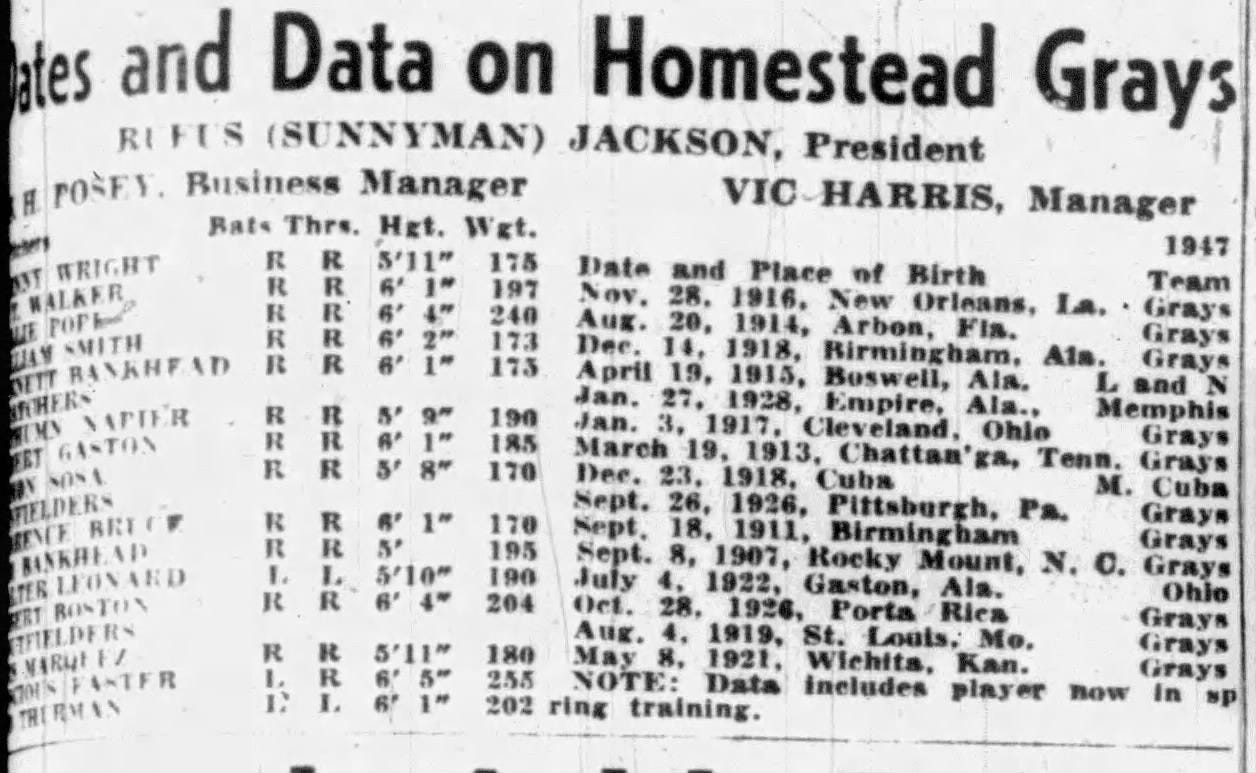
If you zoom in on it, though, it looks a lot more like “Arbon”:
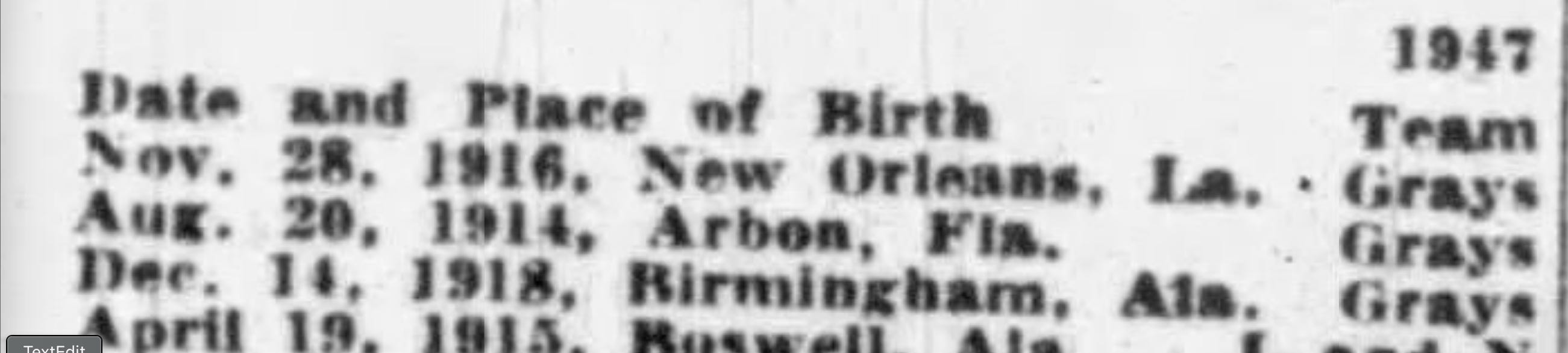
That still doesn’t help much, as there’s no such place as “Arbon, Florida,” either. But we’ll get to that later.
Let’s back off for a minute and trace his career and teams he played for. Riley has Walker starting off in 1944 with the independent St. Louis Stars, then continuing with the Homestead Grays from 1945 through 1949. (He adds a 1946 detour with the Boston Blues of the United States League.) The 1944 St. Louis Stars were purchased in the middle of the season by Abe Saperstein and became the Harlem Globe Trotters, and Walker appeared for the team under both names. R. T. Walker also pitched for the St. Louis-Harrisburg Stars of 1943, and the New York Black Yankees in 1942. (The Stars had merged with the Black Yankees for the 1942 season, then the two clubs unmerged for 1943.)
He also pitched one game for the Cleveland-Cincinnati Buckeyes in 1942. This occurred in connection with one of the worst tragedies in Negro league history. In the early morning of September 7, 1942, the Buckeyes were returning from Buffalo in three cars because their team bus was broken down. One of the cars, carrying five players and business manager Wilbur Hayes, suffered a flat tire. After it was replaced the car, driven by catcher Ulysses “Buster” Brown, pulled out on the highway and was immediately rear-ended by a truck, which drove the car off the road and crushed it against a tree. Two of the players—the driver Brown and pitcher Raymond “Smoky” Owens—were killed, and the rest were badly injured.
Astonishingly, at least from a present-day perspective, the Buckeyes went ahead and played the two games they had scheduled that day, in the afternoon at Akron, and that night in Meadville, Pennsylvania, both inter-league exhibitions against the Black Yankees. Because one of their pitchers had been killed and three more were in the hospital, the Buckeyes ended up having to use a Black Yankees pitcher as a reliever in Meadville—and that pitcher was R. T. Walker.
I wasn’t able to find any certain evidence of Walker in the 1939, 1940, or 1941 seasons—but in 1937 and 1938 an R. T. Walker pitched for the Black Eagles of Elizabeth, Allen Parish, Louisiana:
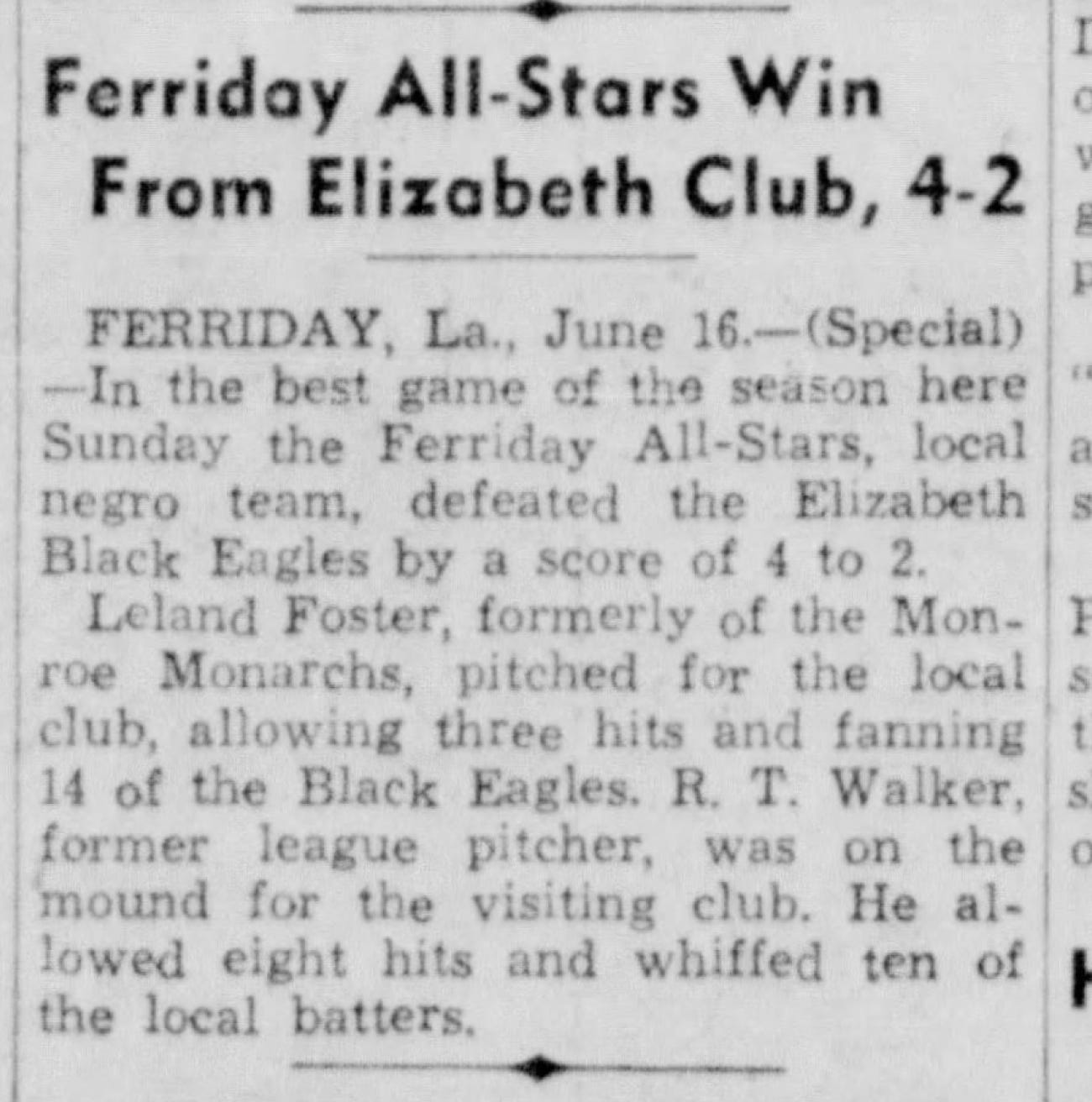
The reference to R. T. Walker as a “former league pitcher” is interesting, and a clue for future research.
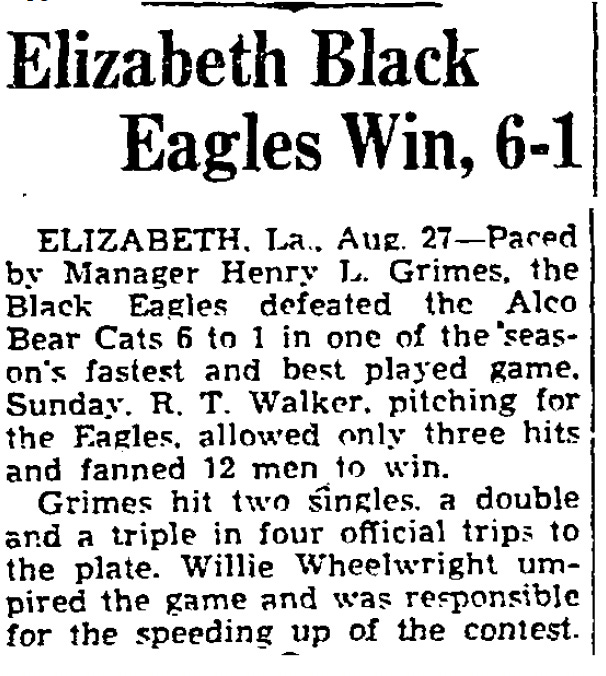
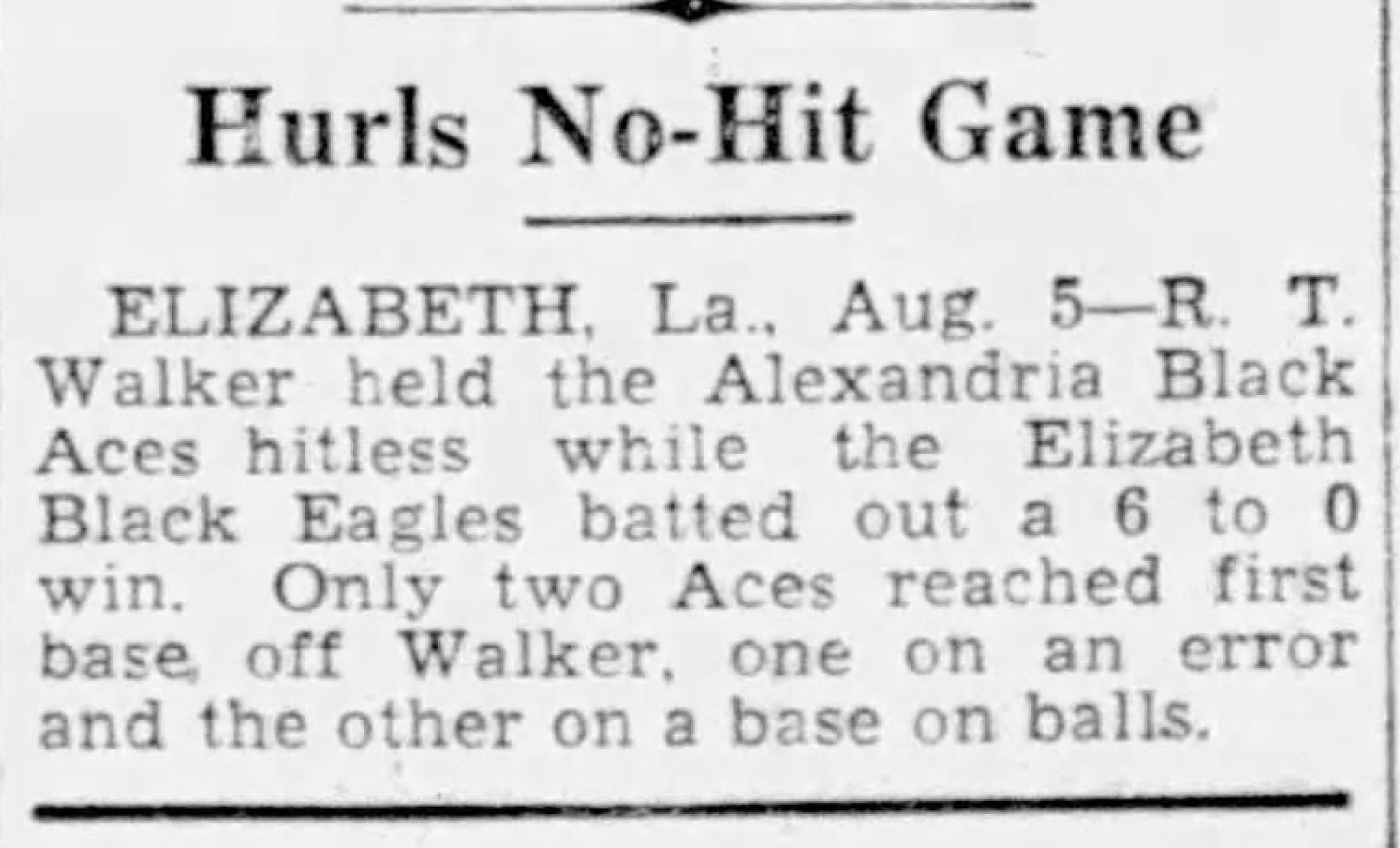
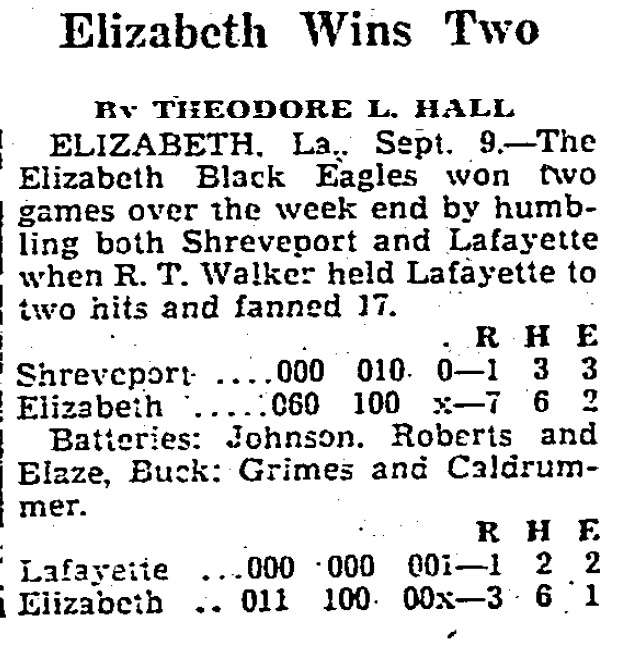
I haven’t found direct evidence of this, but the Black Yankees in 1942 conducted part of their spring training tour in Louisiana, so it could be that they encountered Walker or received a tip about him, and took him back north.
Checking in World War 2 draft cards, there was an R. T. Walker who registered for the draft in 1940 in Elizabeth, Louisiana:
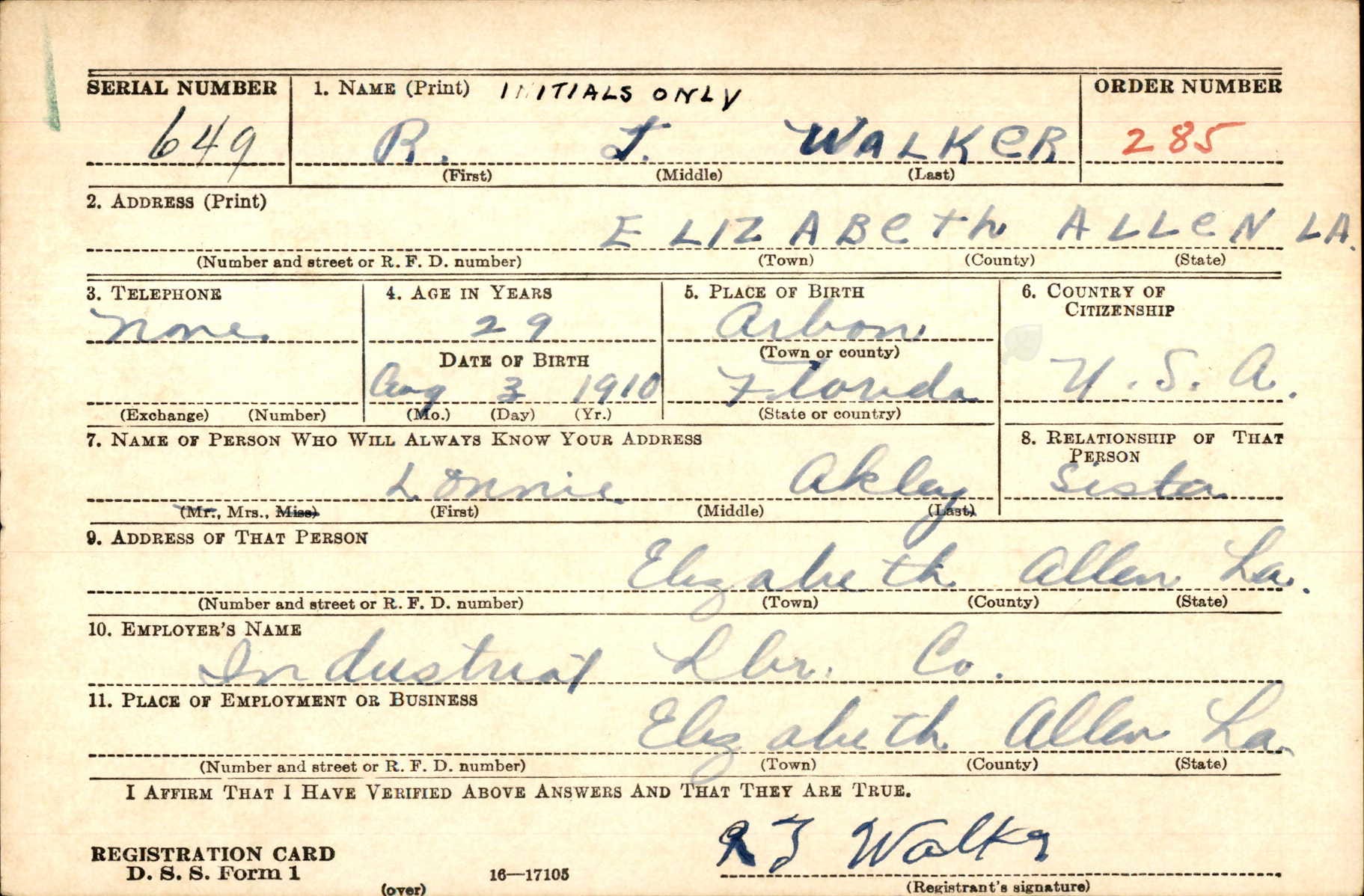
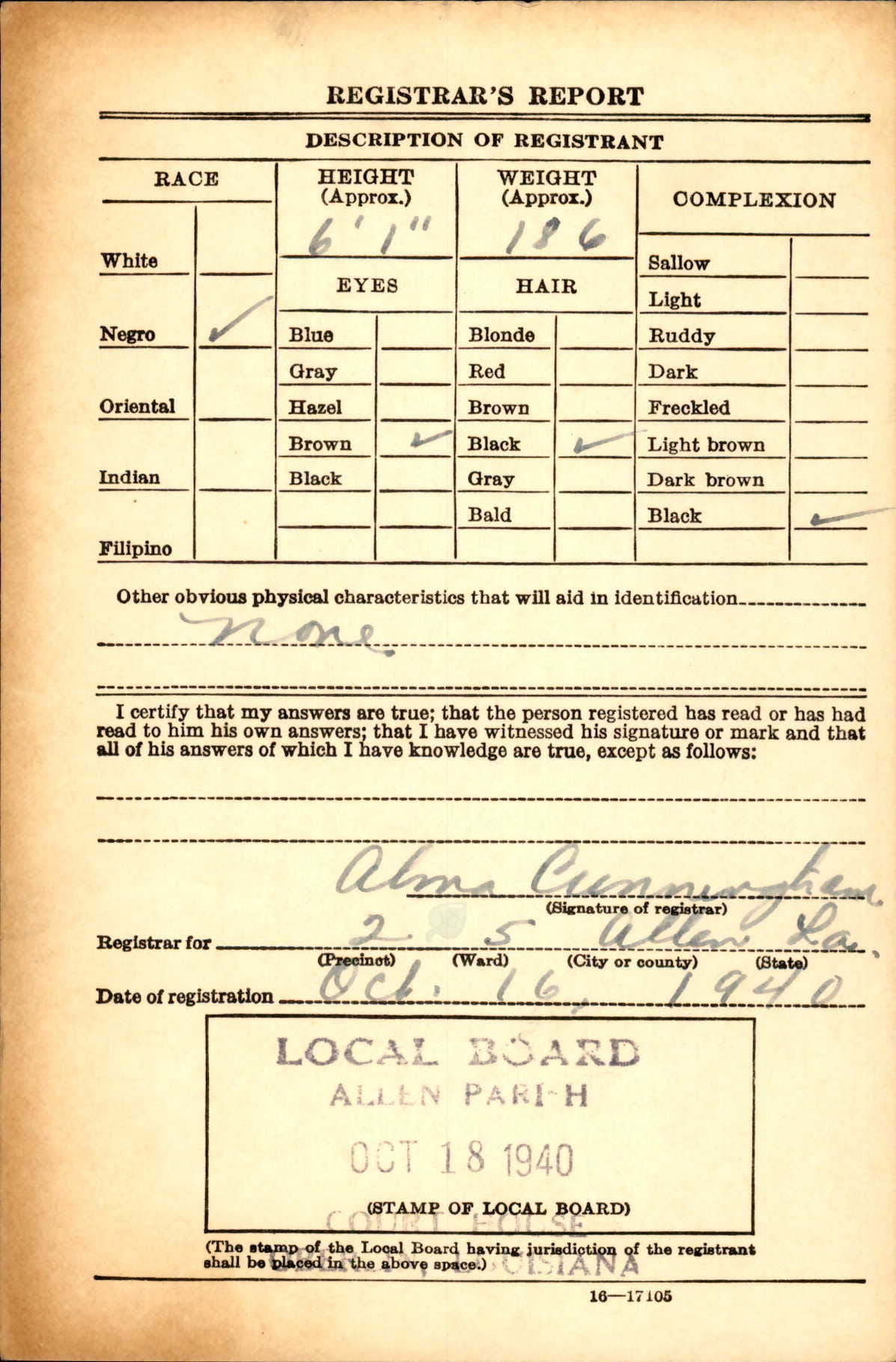
The birth date makes him four years (and 17 days) older than the Courier said in 1948, but it is still in August, and this R. T. Walker’s size is about the same as that of the pitcher (6’1”, 186 pounds, vs. 6’1”, 197 pounds). As the card expressly notes, his first and middle names consist only of initials, so the “R. T.” did not stand for “Robert Taylor,” or anything else. Most pertinently, this is the second instance we’ve seen of an “R. T. Walker” born in Arbon, Florida (a location that seems unique to these two sources).
Switching to the census, in 1940 a 29-year-old Black man named R. T. Walker, born in Florida, can be found living in Elizabeth, Allen Parish, Louisiana, with his wife Lucille.

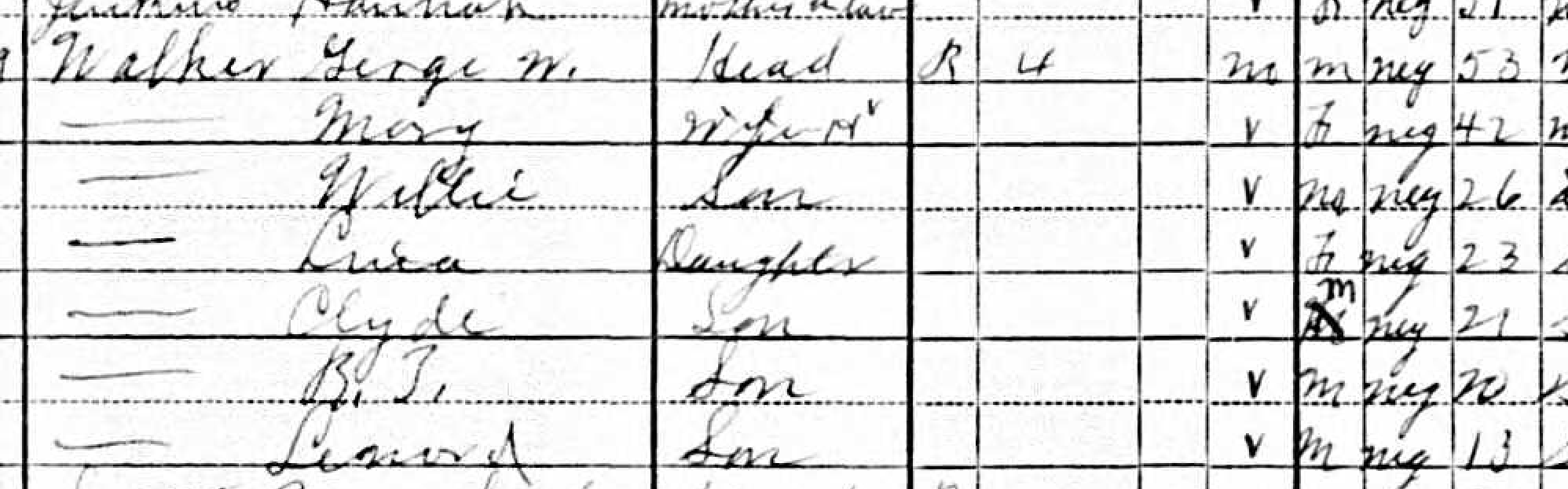
Moving back in time: in the 1930 census, there is a Black family named Walker living in Elizabeth, Allen Parish, Louisiana, with a 20-year-old son named R. T.
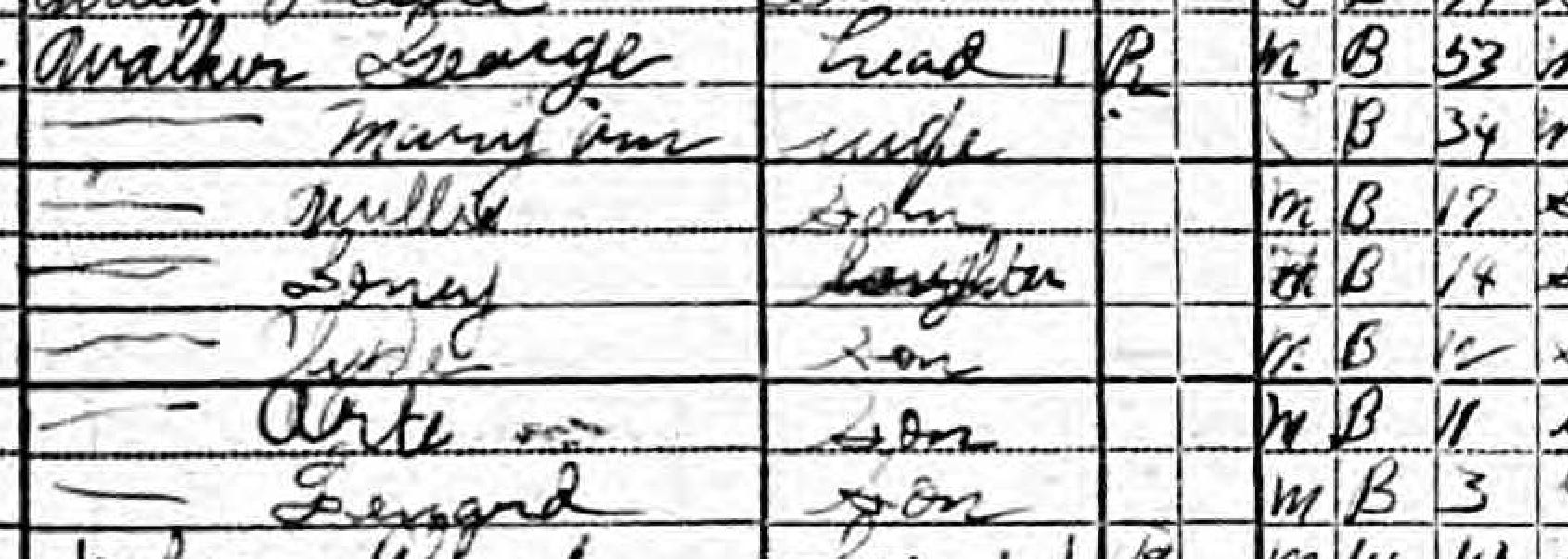
The 1920 census finds this same family living a couple of parish lines away, in Sabine Parish, Louisiana, with 11-year-old son “Arti[e].”
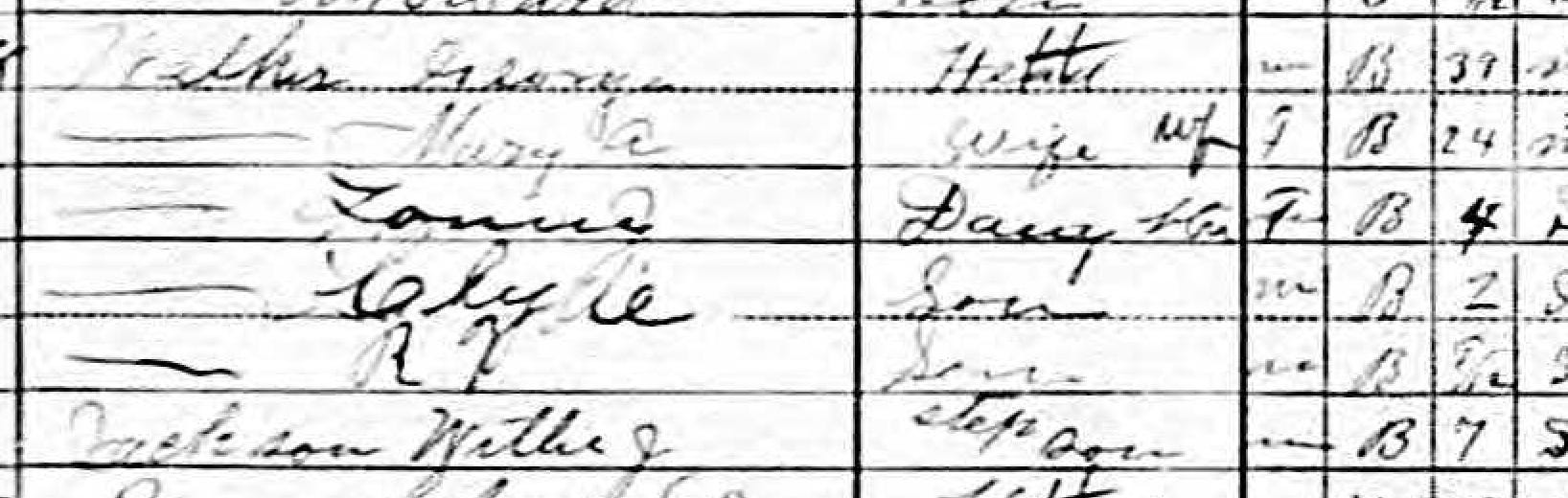
And finally, in the 1910 census, we find 9-month-old R. T. living with his family in Santa Rosa County, in the Florida panhandle. Enumerated on May 9, 1910, this census record implies that R. T. was born in August 1909.
Moving forward to the end of his career, there are a couple of references to his hometown as “Aborn, Florida”:
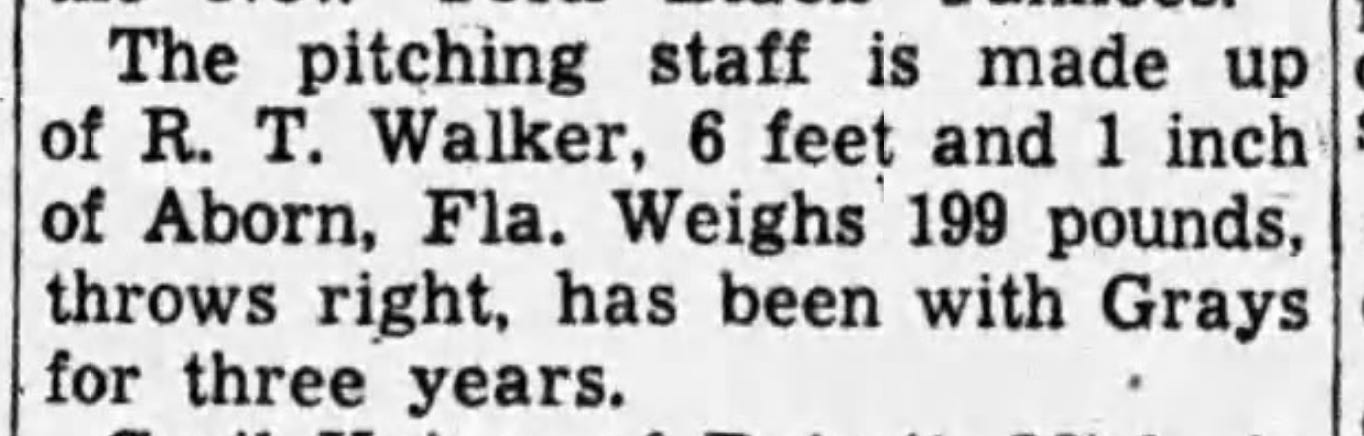
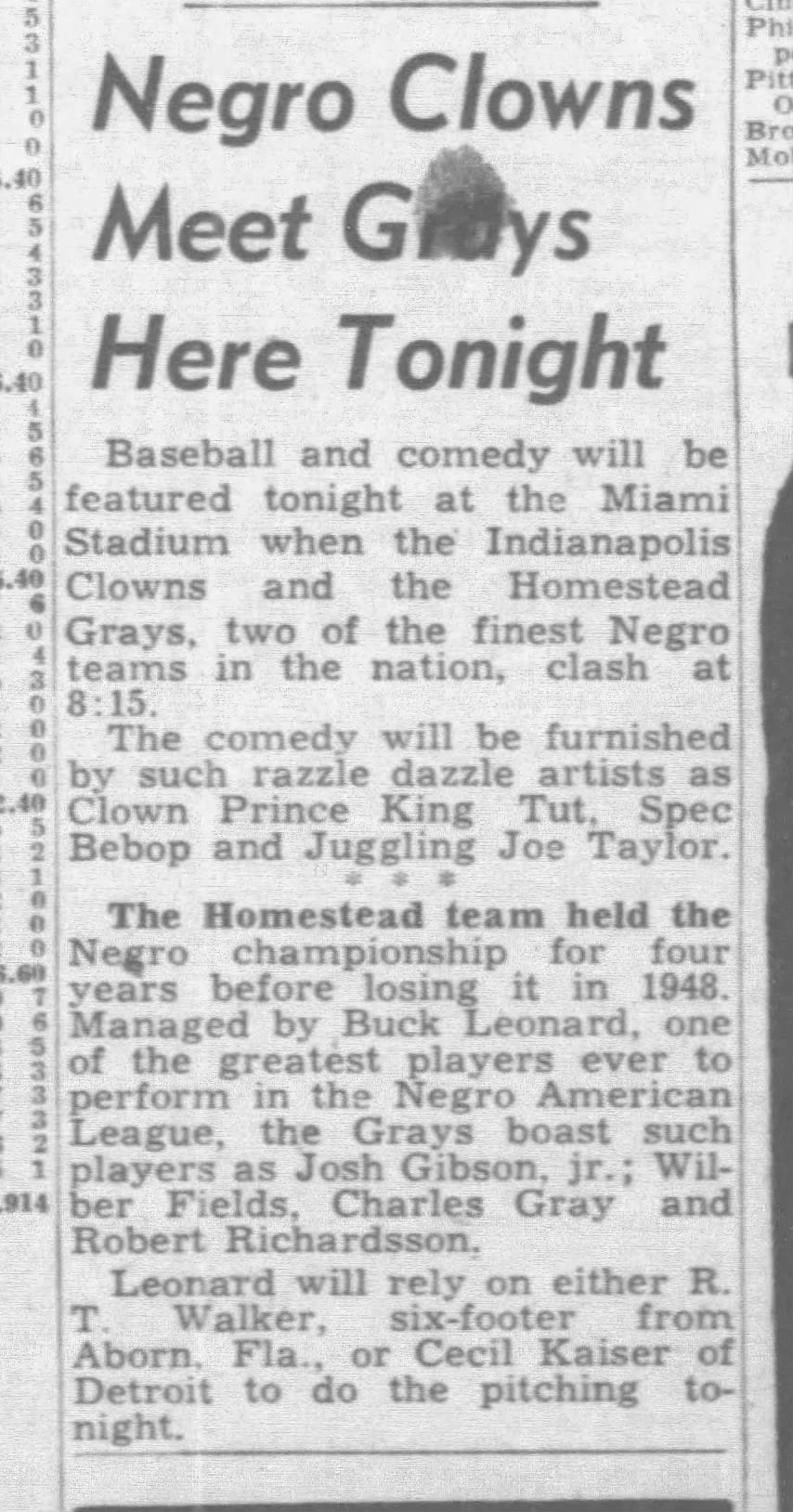
In Okaloosa County, next door to Santa Rosa County, there is a small, unincorporated place called Auburn, just outside of Crestview. There is also an unincorporated town called Avalon in Santa Rosa County, about 43 miles southwest of Auburn, and just across Escambia Bay from Pensacola. It seems to me that “Aborn” or “Arbon” could well be garbled or misspelled versions of either Avalon or Auburn (especially the latter). It’s worth noting that Walker had moved away from Florida by the time he was 10 years old (and possibly much earlier than that), so it is not entirely unsurprising that he might not accurately remember the name of his birthplace.
So here’s the updated biographical information and career trajectory for R. T. Walker:
•R. T. [initials only] Walker
•Born August 3, 1909, in Auburn, Okaloosa County, Florida (or Avalon, Santa Rosa County)
•Elizabeth Black Eagles (1935, 1937-38)
•New York Black Yankees (1942)
•Cleveland-Cincinnati Buckeyes (1942)
•Harrisburg-St. Louis Stars/Harlem Globe Trotters (1943-1944)
•Homestead Grays (1945-1950)
•Boston Blues (1946)
R. T. Walker was already 32 years old when he first pitched in the major Negro leagues in 1942, though he might have pitched in “league baseball” in 1937 or before. His career lasted until he was at least 39. We still don’t know what became of him after he retired from baseball, or how long he lived. My bet would be that he returned to Louisiana. But at least we do know who he was, where he came from (to a reasonable approximation), how old he was, and who he played for.
James A. Riley, The Biographical Encyclopedia of the Negro Baseball Leagues (Da Capo Press, 2002), p. 811.