Off With a Bang: Negro Leaguers Who Homered in Their First Plate Appearance
A couple of years ago Bill Nowlin of SABR asked me about Negro leaguers who homered in their first at bat. It was for a SABR project called Dazzling Debuts. Unfortunately it’s not possible to construct a definitive list, as many Negro league games lack the narratives that would make it possible to know when in a game a home run was hit. In addition, a sizeable minority of Negro league games lack box scores, so we don’t have a record of all home runs hit.
But we can identify two first-plate-appearance home runs for sure, along with a few other possibilities.
Pete Hill: The First Negro League Home Run
The Negro National League started play on May 2, 1920, with a game between Joe Green’s Chicago Giants and the Indianapolis ABCs in Washington Park, Indianapolis. Most of the league’s teams, however, were busy with other commitments, and the official schedule didn’t really get going until the middle of the month. On May 15 the Detroit Stars played their first-ever NNL game, hosting the Cuban Stars at Mack Park. The Cubans took the lead with one run in the top of the first; in the home half, Detroit’s Frank Warfield led off with a double off the Cuban spitballer José Leblanc, then went to third on an out by Joe Hewitt. Jimmie Lyons got on base, probably via a walk, with Warfield held on third. They pulled a double steal with Warfield scoring and Lyons taking second. With the score tied, Detroit player-manager and cleanup hitter Pete Hill stepped up to the plate for his first time at bat in the Negro National League.
The previous year in independent play for the Stars, Hill had hit 28 home runs in 80 games, taking full advantage of Mack Park’s short right field fence. His slugging exploits were mentioned consistently in the papers and compared to Babe Ruth’s breakout season with the Boston Red Sox (Ruth would end up with a major league record 29 home runs). Now Hill had a man on second with one out in the first inning of his team’s first game in the new league. History was ready for him.
He rose to the occasion, launching a two-run homer to give Detroit a 3 to 1 lead, a lead they would turn into a 5 to 2 win. This was not only his first Negro league home run, and a home run in his first plate appearance. It was almost certainly the first Negro league home run, period.
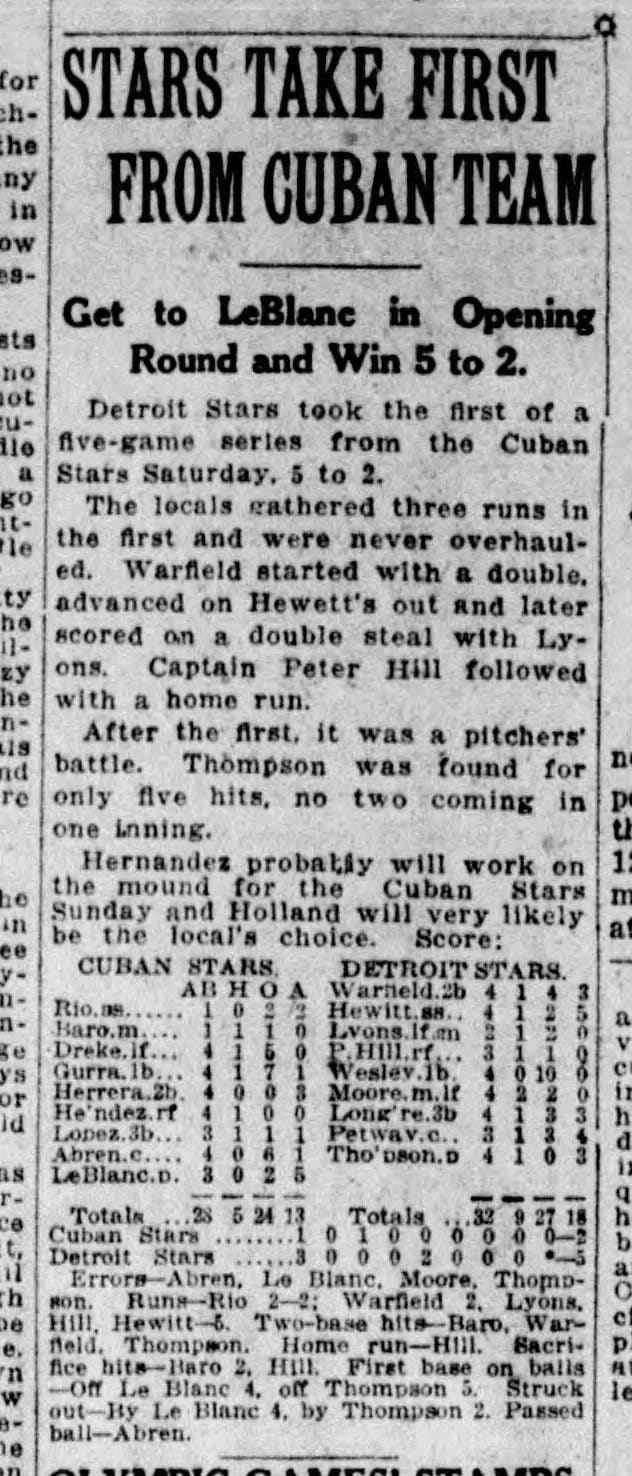
Eight games were played in the NNL prior to May 15, 1920. We have box scores for seven of them, and no home runs were hit in any of those games. Only one game—game 2 of the opening day Chicago/Indianapolis doubleheader on May 2, an 11 to 4 win by the ABCs—lacks a box score. The brief accounts we have of that game mention a second-inning triple by Oscar Charleston (with either two on or the bases loaded—sources differ) as the game’s big hit. There is no mention of a home run, though the lack of a box score makes it impossible to say for sure. No other NNL games were played on May 15, so Pete Hill’s first-inning blast that day stands as the first known home run in any of the seven recognized Negro major leagues.
Of course, we are deploying the term “Negro leagues” in its strictest sense: the seven canonical Black major leagues that operated from 1920 through 1948, the leagues that have been recognized by MLB as “major league.” Hill was a 37-year-old veteran in May 1920. It was (at least) his 17th season as a professional ballplayer. He had played league baseball before, with several seasons in the Cuban League in addition to the 1907 National Association of Colored Professional Clubs, the 1908 International League (not the minor league, but a Philadelphia-based, racially integrated league of Black, Cuban, and white semipro teams), and the 1909 Chicago City League. He batted .351 with 1 home run in 24 exhibition games against white major leaguers in Cuba. So he was far from a rookie.
The Seamheads Database uses a more expansive definition of “Negro league” that includes games between teams at the top level of independent, pre-league Black professional baseball. Under this definition, Hill hit a minimum of 41 Negro league home runs prior to 1920. This of course does not include many games without box scores, and many more games against white minor league and semipro opposition. Nevertheless, on May 15, 1920, Pete Hill struck the first home run in the MLB-recognized (1920-1948) Negro leagues, and he deserves recognition on those terms.
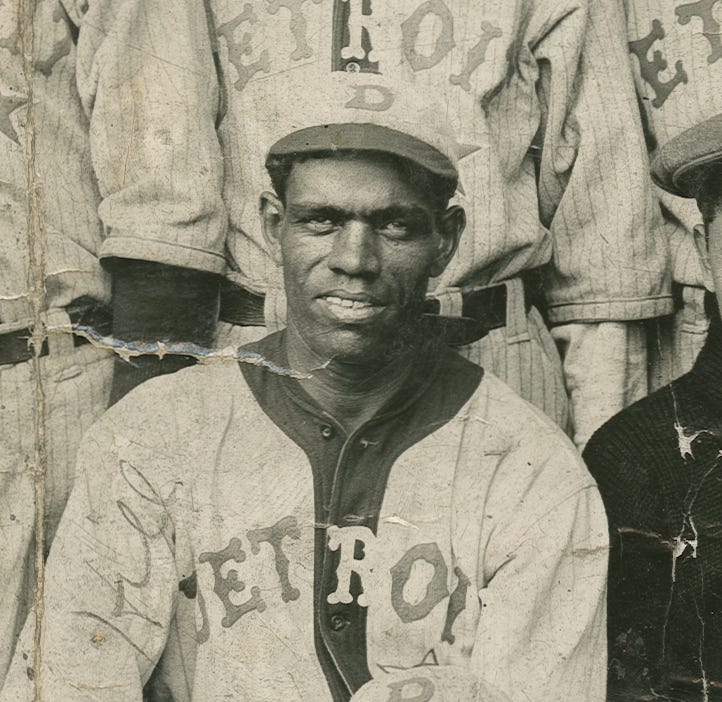
Returning to our original subject, this also makes Pete Hill one of only two Negro leaguers who are definitively known to have hit a home run in their first Negro league plate appearance. The other one is extremely obscure as a ballplayer, but much better known for his other careers.
Earl Brown: From Harvard to the Negro Leagues to New York City Council
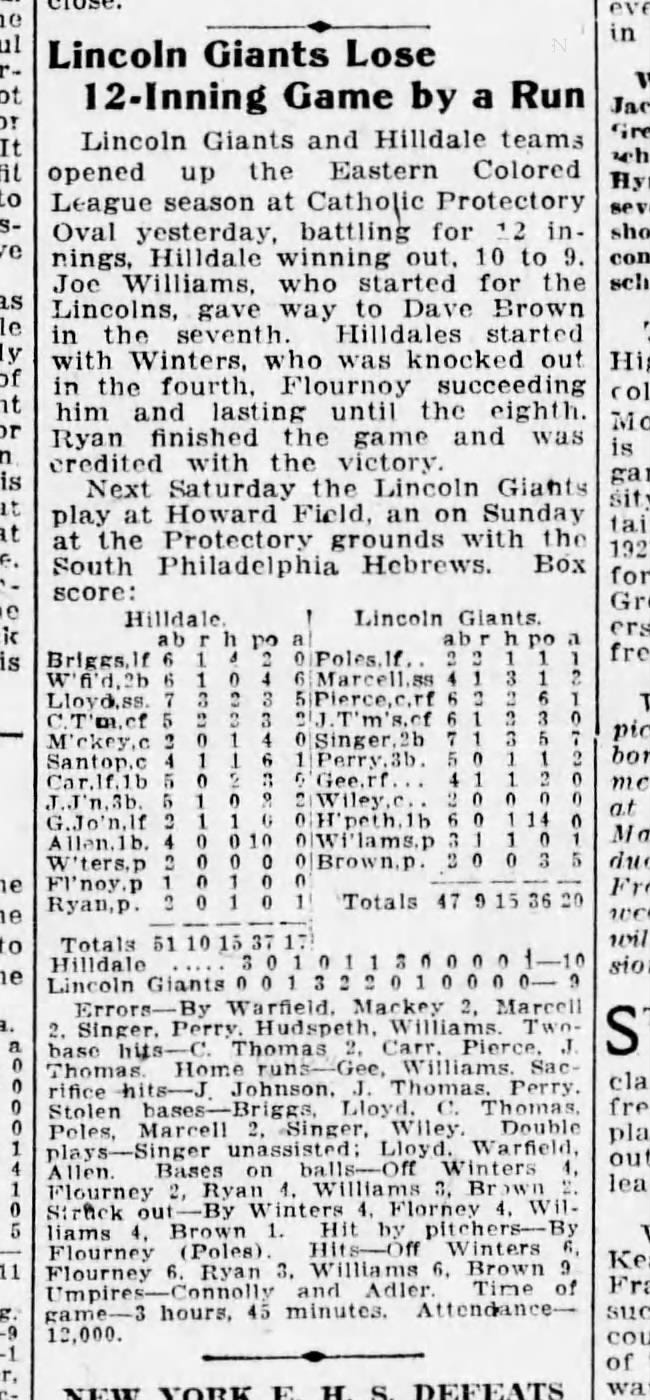
In July of 1924, Earl Brown, a lefthanded pitcher who was Harvard’s first Black player in about twenty years (since William Clarence Matthews and Eugene Gregory in the 1900s), was working a summer job as a red cap at Grand Central Terminal in New York City. The manager of the New York Lincoln Giants, Judy Gans, tracked him down and offered him a contract, and by July 6 he was in a Lincolns uniform. On Wednesday, July 9, in Bradley Beach, New Jersey, he took the mound against the Atlantic City Bacharach Giants. In the bottom of the second inning, the Lincolns, trailing 2 to 0, put across four runs on three home runs, one of them by Earl Brown, in his first professional plate appearance.
Brown “pitched a pretty game,” according to the Asbury Park Press, “but he was free with his passes and these resulted in runs. He weakened in the eighth and allowed his opponents to pommell [sic] him for four of their nine hits and the game.” (July 10, 1924, p. 15). The Bacharachs won 7 to 5.

Brown would continue the next few months with the Lincolns, appearing at least twice more as a reliever and ending up with an 0-2 record and a 7.82 ERA in league games. In September the Baltimore Afro-American reported that he had “found the pace too strenuous and gave up professional ball” (September 12, 1924, p. 1). His post-baseball career was considerably more illustrious: he would go on to be a well-known sportswriter and journalist before getting into politics, spending 12 years on the New York City Council and serving as Acting Borough President of Manhattan and chairman of the city’s Commission on Human Rights. He passed away in 1980.
For more on Earl Brown, see Stephen Eschenbach’s article in Harvard Magazine (also linked earlier).
Other Candidates
There are a few more possibilities for first-at-bat home runs in the Negro leagues that we can’t yet verify, due to the lack of detail in game reports.
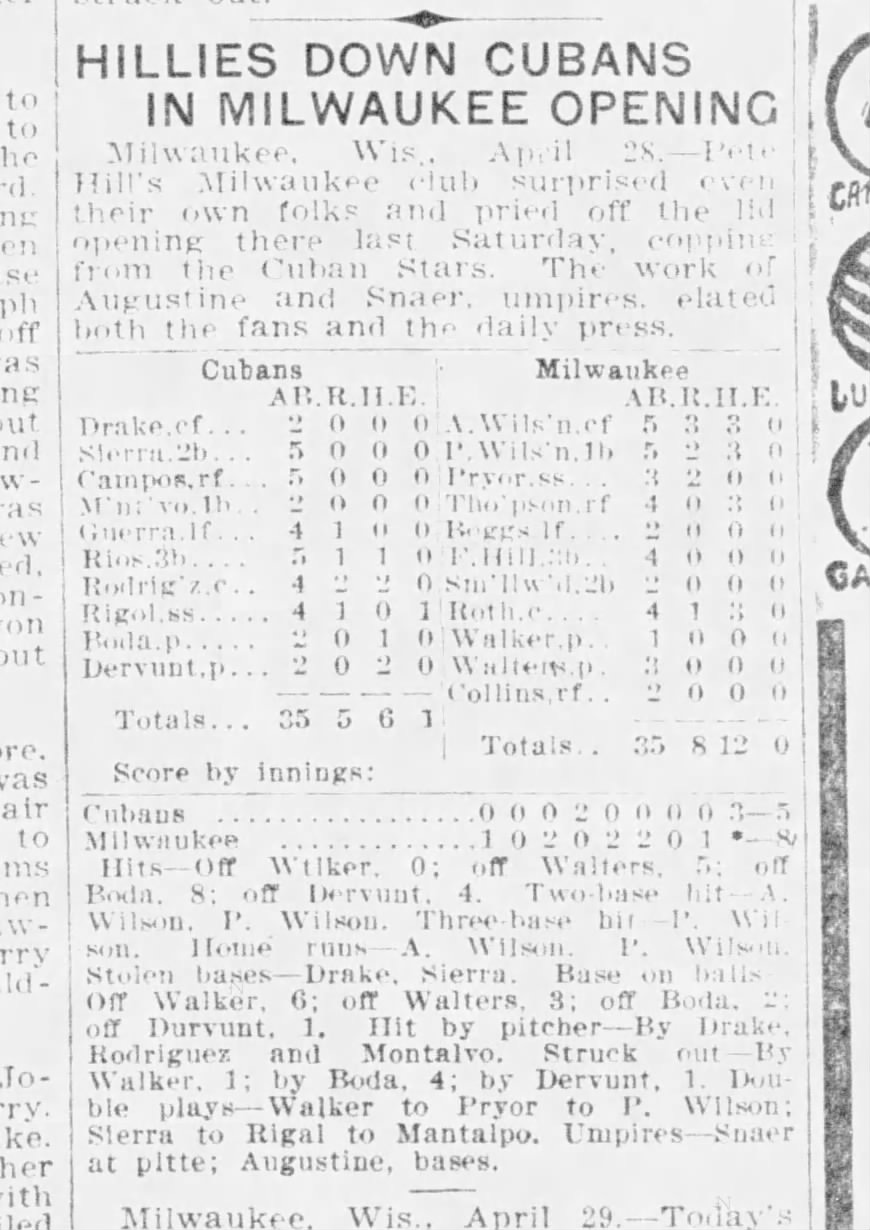
April 28, 1923: The brand-new Milwaukee Bears, player-managed by Pete Hill, “surprised even their own folks” (in the words of the Chicago Defender) by winning their opening league game against the Cuban Stars. The Bears spiced their offense with home runs by center fielder and leadoff hitter Andrew Wilson and first baseman/number two hitter Percy Wilson (no relation), each playing his first game in the NNL. Unfortunately none of the articles we’ve seen about this game gives any details on the Wilsons’ home runs. The Bears did score one run in the first inning, so it is possible that one of them opened his major league account with a homer, but on the present evidence there’s no way to know.
April 29, 1923: The very next day after the Wilsons’ pair of blasts, Rich Gee homered in his league debut with the New York Lincoln Giants. Again, there was no description of his hit or when it occurred. The Lincolns went scoreless in their first two innings, and Gee batted seventh. Conceivably his team could have gone out 1-2-3 twice in a row then Gee homered as the leadoff hitter in the third—so it is a possibility.
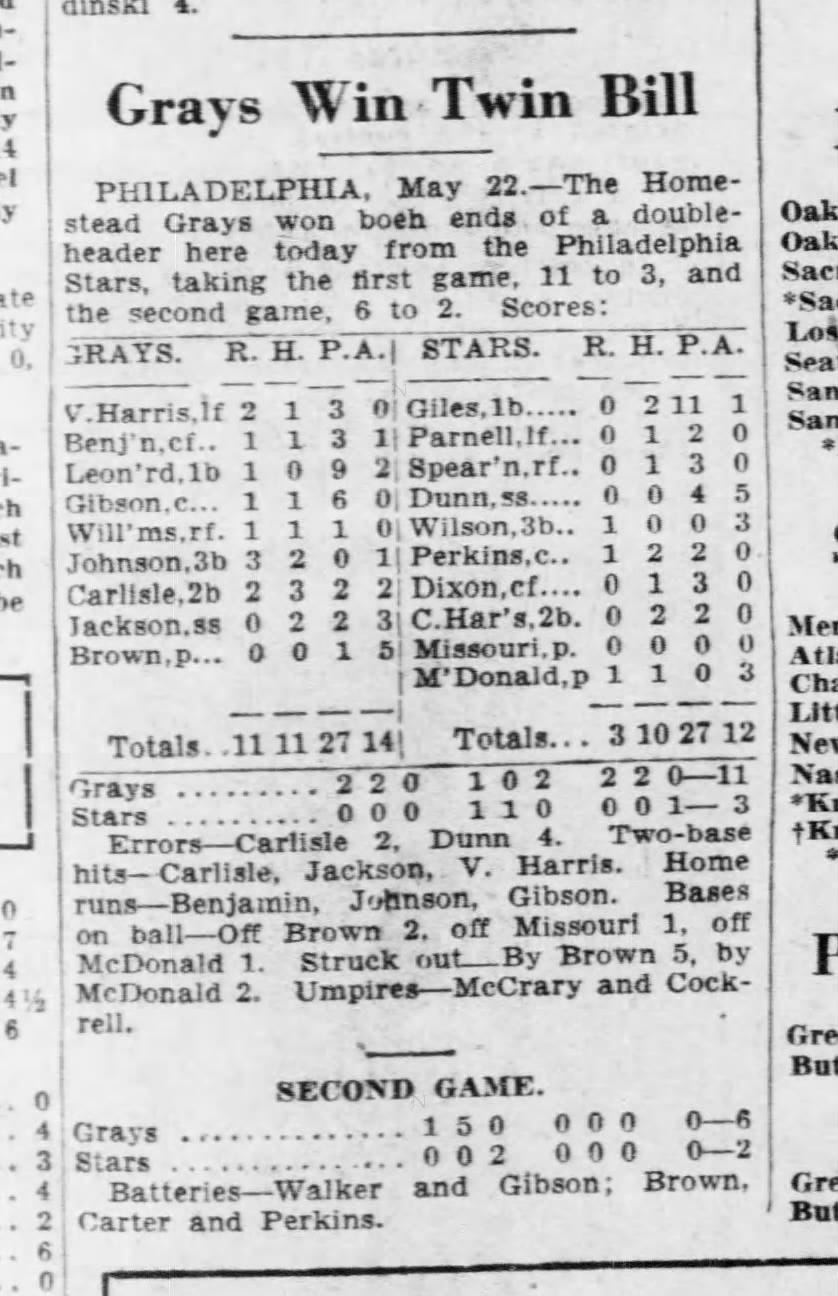
May 22, 1938: There were (at least) three significant Jack Johnsons in Negro league history: the heavyweight champion that you’re probably thinking of (who had various baseball connections), Topeka Jack Johnson (also a boxer, but primarily a baseball player and manager in the early 20th century), and Jack Johnson of the 1938 Homestead Grays. This last bearer of the name was a sandlot star for such teams as the Edgar Thomson Steel Works and the Pittsburgh Monarchs (and also starred in semipro football and basketball). He tried, and failed, to catch on with the 1938 Pittsburgh Crawfords, but the Homestead Grays quickly snapped him up. He got off to a fast start, hitting a single and a home run in his first league game, an 11 to 3 Grays victory over the Philadelphia Stars. There are, of course, no details about the home run, but the Grays scored two runs in each of the first two innings, so it is possible that Johnson, who batted sixth, could have hit a leadoff home run in the second inning.
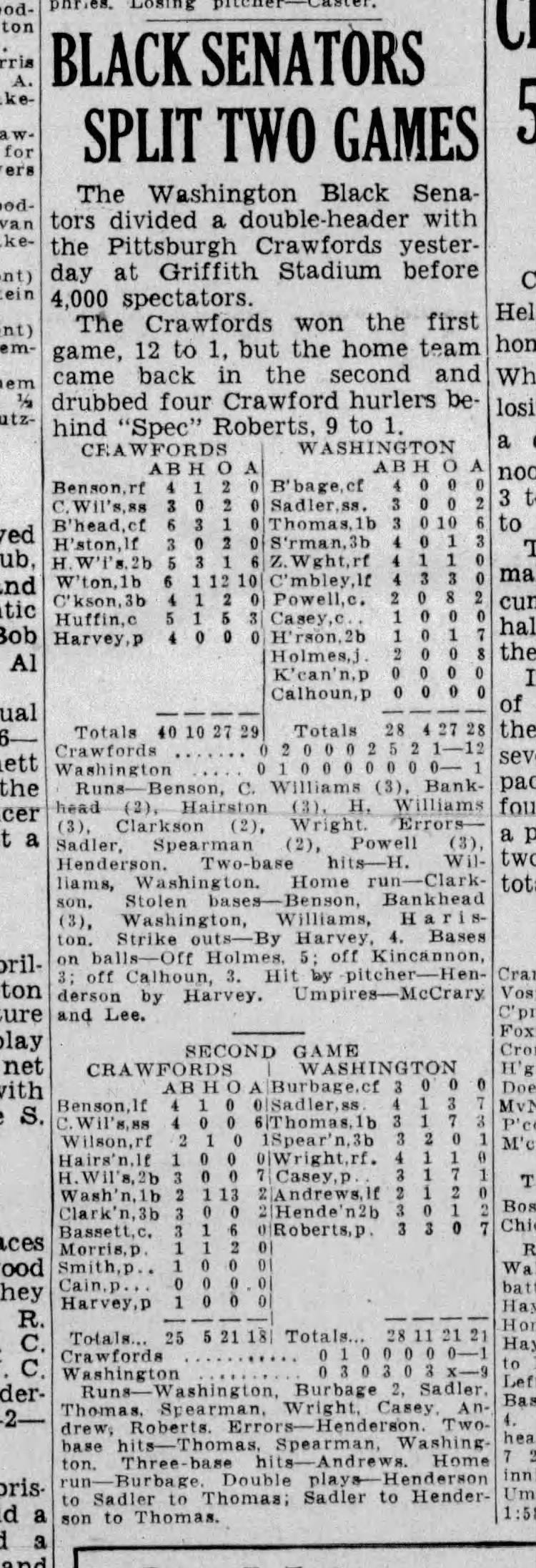
June 19, 1938: Less than a month after Johnson’s debut, his erstwhile Edgar Thomson teammate James “Bus” Clarkson homered in his first league game for the Pittsburgh Crawfords, batting in the number seven spot. The Crawfords (playing the Black Senators in Washington) did not score in the first inning, but scored twice in the second, so Clarkson could have hit his home run in his initial time at bat.
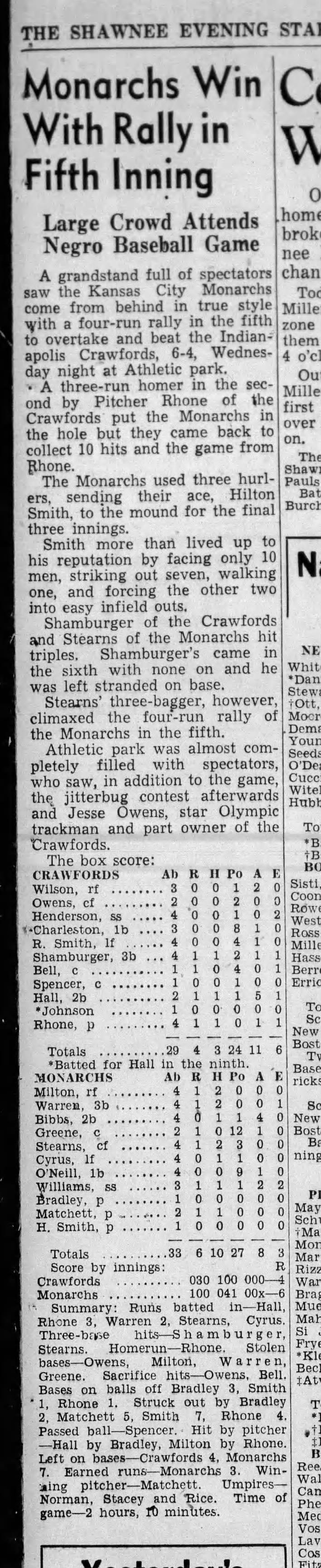
August 14, 1940: The Toledo-Indianapolis Crawfords, on tour in Texas, signed Douglas Rhone, a Houston-area boxer and pitcher. On July 30 he appeared as a reliever in a 10 to 9 loss to the St. Louis Stars in Houston. No box score was printed, so it’s not known whether or not he came to bat. A couple of weeks later he started for the Crawfords against the Kansas City Monarchs in Shawnee, Oklahoma. Rhone lost the game, 6 to 4, but in the second inning he temporarily put his team ahead with a three-run home run. Since he was batting ninth, it was definitely his first time up. So if he did not bat in the July 30 game, he could well have homered in his first Negro league plate appearance.
These barnstorming games are quite likely not to have counted in the official Negro American League standings, though that, too, is uncertain, as the NAL did not provide reliable standings or results, so it is mostly not possible now to know exactly which games were official.
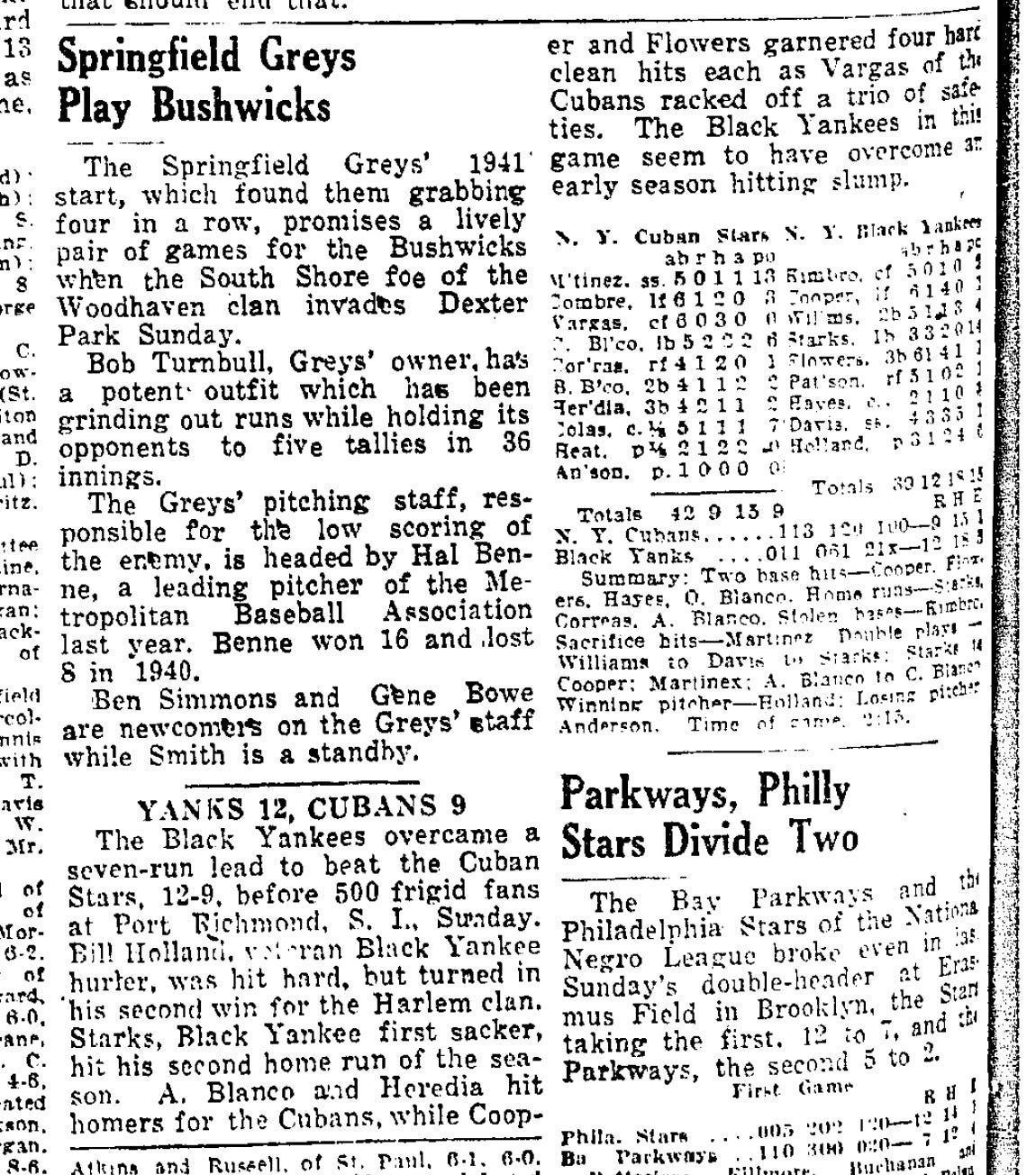
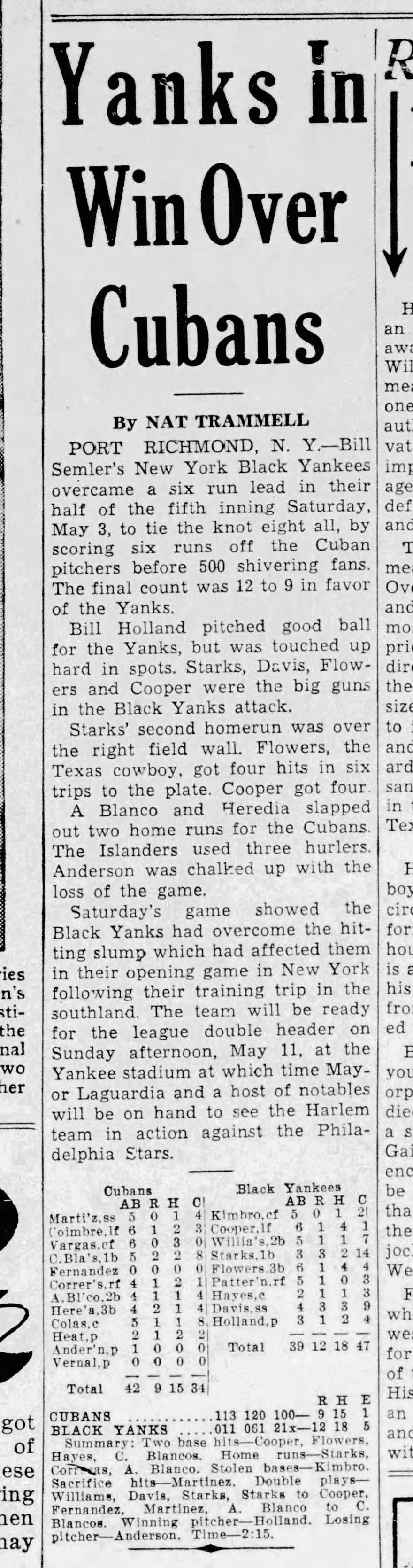
May 3, 1941: The Blanco brothers, Carlos (first base and third base) and Heberto (second base and other infield positions), played together on several teams in the 1930s and 1940s, most notably Habana in the Cuban League and the New York Cubans in the Negro National League. On May 3, 1941, they appeared in their first game for the Cubans, facing the Black Yankees on Staten Island. “A. Blanco” (that is, Heberto) homered for the Cubans, but the available sources do not indicate whether it came in his first plate appearance or not. Heberto batted sixth, and the Cubans scored once in the first inning, so he couldn’t have hit it then; but they scored another run in the second inning, so it is possible he hit a solo home run in that inning. Or he could have hit it later in the game, as the Cubans scored seven more runs (three in the third, one in the fourth, two in the fifth, and one more in the seventh).
I’ll close by noting that of course there might well be (almost certainly are) other cases of first-at-bat home runs. Most obviously we haven’t finished compiling known details of games without box scores, so we could find some there; also we might find additional accounts of games that already have box scores, with new details. Retrosheet is ahead of us in actually posting details of games, so they may find these games before we do.